Research Article | | Peer-Reviewed

Pesticide Residue in Leafy Vegetables and Hygienic Practices of Handlers in a Major Market in Ibadan, Nigeria

Received: 16 October 2025     Accepted: 25 March 2026     Published: 15 April 2026
Views:       Downloads:
Abstract

Introduction: Leafy vegetables are a vital part of a balanced diet due to their high nutritional content, including fibre, vitamins, and minerals. However, there are concerns about the safety of the vegetables due to contamination from poor hygienic handling and pesticide residues. Major health problems associated with vegetables that contains pesticides residues are immunological suppression, hormonal changes and occurrence of different cancers. There are limited studies on the safety practices of vegetable handlers and isolated pesticides of raw and cooked vegetables. Hence, this study investigates the hygienic practices among vegetable handlers and levels of pesticide residues in a commonly consumed leafy vegetable. Methods: A descriptive cross-sectional study design and laboratory analysis was used. Through random sampling, 80 vegetable handlers in Bodija market were selected. Data on hygiene knowledge, attitudes and practices were obtained using structured questionnaires. Pesticide residues in Corchorus olitorius vegetable was analyzed using QuEChErs and Gas chromatography-Mass Spectrometry (GC-MS). The data was presented in mean, standard deviation, simple percentage and charts. The result was compared to the Maximum Residue Limits (MRLs) set by Codex Alimentarius Commission. Results: The study shows that 86.3% of respondents were female, and 13.8% were male. Majority of the respondents (82.5%) recognized dirty water used for washing the vegetables as a major source of contamination while 45.0% acknowledged handling with unclean hands as a risk factor, and 30.0% identified pesticides as potential contaminants. Only 65.0% noted poor hygiene could affects quality of vegetable. However, 50.0% practiced hand washing, and 83.8% saw no need to cover their vegetables. The laboratory analysis revealed that raw leafy vegetables contained 37 pesticide residues and metabolites with cyhalothrins (1.592, 2.930, and 4.069) mg/kg exceeding the MRLs of 0.7mg/kg. Whereas cooked samples contained only 19 pesticide residues and metabolites with chlorfenapyr (16.373, 4.566, 19.511, 2.228, 2.525, 2.596, 2.287, and 17.471) mg/kg exceeding the MRLs of 0.05 mg/kg. Fosetyl aluminum was within (MRLs) set by regulatory bodies in both cooked (0.043) mg/kg and raw samples (0.2, 0.1) mg/kg. Conclusion: The use of protective gear and proper vegetable covering are not consistently applied. Storage and handling conditions were suboptimal which may increasing the risk of microbial contamination. Also, pesticide residue was present in high concentration in the selected vegetable, which can cause health problems over time. This study highlights the urgent need for awareness of hygiene importance among vegetable handlers and stricter pesticide regulations in local markets.

Published in American Journal of BioScience (Volume 14, Issue 2)
DOI 10.11648/j.ajbio.20261402.13
Page(s) 36-46
Creative Commons

This is an Open Access article, distributed under the terms of the Creative Commons Attribution 4.0 International License (http://creativecommons.org/licenses/by/4.0/), which permits unrestricted use, distribution and reproduction in any medium or format, provided the original work is properly cited.

Copyright

Copyright © The Author(s), 2026. Published by Science Publishing Group

Keywords

Maximum Residue Limits, Food Safety, Pesticide Residue, Hygienic Practices

1. Introduction
Leafy vegetables are an important part of a healthy diet. They are a great source of fiber, antioxidants, iron, calcium, and other minerals in addition to vitamins A, C, and they’re low in calories . In Nigeria, leafy greens are a staple diet because they are high in nutrients and help provide food security. However, the cultivation, care and harvesting of these vegetables are very important and ensuring food safety across the supply chain is largely dependent on hygienic procedures. Farmers, transporters, and market vendors who handle vegetables come into direct touch with the crop, increasing the possibility of contamination if basic hygiene is not maintained. Poor hygiene procedures can lead to contaminants such as dirt, pesticide residues, and microbial infections, which can worsen the safety hazards related to these vegetables .
Unsanitary practices, such as poor cleaning, exposure to environmental pollutants, improper storage, and handling of vegetables without protective measures, are common in many Nigerian marketplaces, including Bodija Market, a major market hub in Ibadan, where a variety of vegetables, including jute leaf, and different vegetables are sold. A substantial portion of the general population eats these vegetables because of their accessibility and health advantages. However, there are increasing doubts about these vegetables' safety, especially in regard to the possibility of pesticide residue contamination and improper handling procedures . Also, large numbers of consumers purchase vegetables daily in this market, and understanding the hygienic conditions and pesticide residue levels in leafy vegetables is critical for public health interventions.
While pesticides aid in the management of pests and increase crop yields, if they are not applied correctly, vegetables may contain hazardous residues sometimes even surpassing the maximum residue limits (MRLs) set by international and national regulatory bodies by the time they are consumed . According to the World Health Organization (WHO) , approximately 3 million cases of pesticide poisoning occur each year, resulting in around 220,000 deaths, with a significant portion of these incidents linked to contaminated food and vegetables. Leafy vegetables are predicted to have significant residual pesticide levels due to their vast surface areas and the fact that pesticides are directly applied to their leaves . Leafy vegetables such as jute leaf, Corchorus olitorius, are particularly vulnerable to pesticide contamination. While pesticides aid in the management of pests and increase crop yields, if they are not applied correctly, vegetables may contain hazardous residues sometimes even surpassing the maximum residue limits (MRLs) set by international and national regulatory bodies by the time they are consumed . Environmental issues including poor sanitation, restricted access to clean water, and ignorance of food safety regulations can lead to the improper handling of vegetables in many developing nations, including Nigeria . Also, Contamination of vegetables is sometimes caused by vegetable handlers using inadequate washing techniques, and a lack of protective gear .
The elderly, children, and pregnant women are among the vulnerable groups that are most vulnerable because of their increased susceptibility to toxic exposures . Pesticide residues in leafy vegetables can lead to both acute and chronic health problems. Acute exposure, often resulting from high levels of pesticide residues, can cause nausea, vomiting, dizziness, skin irritation, and neurological disorders. In extreme cases, poisoning may occur, leading to severe health complications or even death. Chronic exposure, on the other hand, has been linked to long-term health effects such as cancer, endocrine disruption, reproductive issues, and neurodevelopmental disorders .
Maximum Residue Limits (MRLs) for pesticide levels in food are set by regulatory bodies like Codex Alimentarius Commission and other international organizations, however, monitoring and enforcement in Nigeria, especially at the local market level, are still insufficient. Even though’ Bodija Market is one of the biggest vegetable markets in Ibadan, there is currently little information available about the amounts of pesticide residues in leafy vegetables sold there. Policymakers and health officials may find it difficult to adequately regulate and guarantee food safety due to the dearth of data . By providing evidence of pesticide residue levels in commonly consumed leafy vegetables, this study will fill a critical knowledge gap and guide policymakers in developing better regulations for the use of pesticides in vegetable production. Furthermore, it will help identify whether pesticide residue levels exceed the permissible limits, potentially prompting the need for stricter control measures and monitoring systems. In addition, little information is known about the levels of pesticide residues in vegetables sold at neighborhood markets and the hygienic conditions in which they are handled. It is uncertain how safe the vegetables that the population of Ibadan eat because of this lack of knowledge. Consumers may be unintentionally exposed to dangerous amounts of pesticide residues in the absence of proper assessment and monitoring, and there is a dearth of knowledge and instruction on safe food handling procedures in many developing nations, Nigeria inclusive. Therefore this study seeks to identify the hygienic practices among vegetable handlers and determines the presence of pesticide residues in a commonly consumed leafy vegetable sold in Ibadan major market.
2. Methods
2.1. Study Design
The descriptive cross-sectional study design and laboratory analysis was adopted. The study was conducted in two phases; use of a questionnaire to assess hygienic practices of vegetable handlers and laboratory analysis of vegetables to detect and quantify levels of pesticide residue using GC-MS.
2.2. Study Area
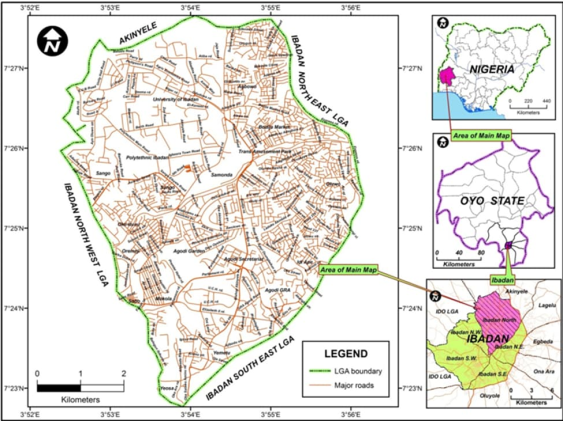
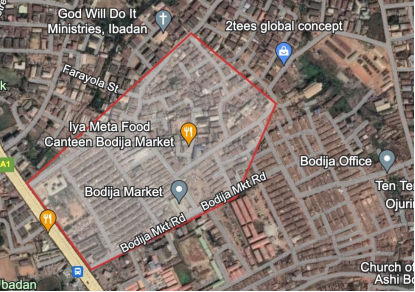
The study was carried out in bodija market in Ibadan North Local Government Area of Oyo State. Ibadan North (Figure 1) is located between latitude 7º 38'N to 7° 44´ N and longitude 3º 88' E and 3° 95´ E. Bodija Market (Figure 2) covers an area of approximately 7,207 m² (Oyo State of Nigeria 2009). The market is predominantly a food market. Goods sold in the market include vegetables, tubers, grains, cassava flakes, yam flour, frozen foods, electronics, shoes, bags, and plastics among others.
Figure 1. Map of Ibadan North Local Government, Ibadan, Oyo State.
Figure 2. Map showing Bodija Market in Ibadan North Local Government.
2.3. Study Population
The target population in this study was consenting vegetable handlers at Bodija market that met the inclusion criteria. This population was chosen to ensure a wide range of perspectives on knowledge, attitude and practices regarding vegetable hygiene as vegetable handlers.
2.4. Sampling Techniques
A systematic sampling in which every nth vegetable handler in the population were selected in bodija market. For pesticide residue testing, simple random sampling was used to select leafy vegetables from different sellers and points in the market in order to obtain representative samples.
2.5. Sample Size Determination
The sample size was determined using Fishers formula:
n=Z2*p1-pd2(1)
Where:
n = the desired sample size when the population is greater than 10,000
Z = Z-score (e.g., 1.96 for 95% confidence)
P = expected proportion; 0.5 if unknown (Klunbut et al., 2017)
E = margin of error, normally set at 0.05
n=1.962*0.51-0.50.052
n = 384.16 which is 384 respondents
Adjustment for a finite population
n=n01+n0N(2)
Where:
n = Adjusted sample size for a finite population.
N = Total population size.
n=3841+384-1100
n= 79.5 which is approximately 80 respondents
2.6. Pesticide Residue Testing on Leafy Vegetables
The collection of the vegetable samples followed established guidelines set by the Codex Alimentarius. Samples were collected randomly from various locations to account for variability in pesticide application. After collection, samples were stored at low temperatures and transported in clean, sealed containers to the laboratory. The samples were washed to simulate consumer practices, then a portion of the leafy vegetable was boiled to represent cooked sample. Each samples were then homogenized to ensure uniformity. The AOAC 2007.01 method was adopted accommodating the use of QuEChERS procedure.
2.7. QuEChERS Procedure
Homogenized sample of the vegetable (10g) was weighed into a 50ml centrifuge tube, then 10ml of acetonitrile was added into the tube. The mixture was shaken in an orbital shaker for 5 minutes before buffer salt mix of 4g of magnesium sulfate anhydrous and 1g of sodium acetate was added into the tube to induce phase separation and isolate residues in the organic phase. The mixture was shaken again on the vortex mixer for 2 minutes. The sample was centrifuged for 15 minutes at 3000rpm to separate the solvent layer containing pesticides. Sample had intensively coloured extracts and was cleaned up using dispersive Solid-Phase Extraction (d-SPE) where alumina, graphitized carbon black and magnesium sulfate anhydrous were used to remove impurities such as pigments, fats, and plant debris, which may have interfered with analytical instruments. The centrifuge extract resulting from phase separation stage was used; 6ml of the supernatant was transferred into a 15ml clean up tube containing 900mg of magnesium sulfate, 45mg of graphitized carbon black (GCB) and 150mg of alumina. The mixture was shaken on the vortex mixer for 2 minutes then centrifuged for 10 minutes at 3000rpm. A 0.22 micrometre syringe was used to filter the supernatant into an autosampler vial.
The samples, including the quality control samples, were analysed by GC-MS. Quantification was based on two calibration curves (standards analysed before and after the samples). The curves were based on 3-5 matrix matched standard solutions, covering the relevant concentration range. Matrix-matched standards were prepared by adding a representative matrix gained by the same extraction method and cleanup procedure as for the sample.
2.8. MS Scanning in EI-mode from 50-400amu
The concentration of a pesticide in a sample was calculated on the basis of the standard calibration curve. The formula for the regression line is defined by y= αx+β, where α is the slope of the line and β is the intercept with the y-axis. The calibration curve was drawn up by the relative responses obtained when analysing the standards in relation to the internal standard (RP/RIP) as a function of the standard concentration. The content in the sample extract was calculated on the basis of the formula for the for the calibration curve.
For positive identification of a pesticide by GC-MS it was required that the retention time and mass spectrum for sample and standard coincide. For positive identification by GC-MS, it was required that the retention time of two ion transitions (quantifier and qualifier ions) coincide with that of the standard. The relative retention time of the analyte for GC corresponded to that of the calibration solution with a tolerance of ±0.5%. Results were expressed as pesticide concentrations (mg/kg) and compared against MRLs.
2.9. Data Analysis
All data were analysed using Microsoft Excel and Statistical Package for the Social Sciences (SPSS 21). The results were presented using simple percentage, mean, standard deviation of mean and ANOVA.
2.10. Ethical Considerations
Approval to conduct the research was obtained from the University of Ibadan/University College Hospital Ethics Review Committee with Institutional review board number 24/01010.
3. Results
3.1. Socio-Demographic Characteristics of Respondents
The age distribution shows that the majority (36.3%) of respondents were aged 36-45 years, while 20.0% were between 46-55 years. A smaller proportion (10.0%) fell within the 18-25 age group, indicating that the vegetable handling profession is dominated by older individuals. The distribution by gender shows that 86.3% of respondents were female, and only 13.8% were male reflecting a strong female involvement in the handling. The educational background of the respondents varied, with 31.3% having primary education, 25.0% having secondary education, and 11.3% attaining tertiary education. Notably, 22.5% of respondents had no formal education, which may have implications for their knowledge and adherence to hygiene practices. While, the market longevity data revealed that 43.0% of respondents had been selling vegetables for more than six years, demonstrating significant experience in the trade. Conversely, only 6.3% had been in the business for less than a year.
Table 1. Socio-demographic information of respondents.

Age Groups (n=80)

N

%

18-25

8

10.0

26-35

13

16.3

36-45

29

36.3

46-55

16

20.0

Above 55

14

17.5

Total

80

100.0

Gender (n=80)

Male

11

13.8

Female

69

86.3

Total

80

100.0

Level of Education (n=80)

No formal education

18

22.5

Primary education

25

31.3

Secondary education

20

25.0

Tertiary education

9

11.3

Vocational training

8

10.0

Total

80

100.0

Market Longevity (n=79)

6 months-1 year

5

6.3

1-3 years

20

25.3

4-6 years

20

25.3

More than 6 years

34

43.0

Total

79

100.0

Sales Demography (n=80)

Jute leaf (Ewedu)

Yes

56

70

No

24

30

Total

80

100

3.2. Knowledge of Hygiene and Food Safety Among Vegetable Handlers
The majority of respondents (82.5%) recognized dirty water as a major source of contamination. However, only 45.0% acknowledged handling with unclean hands as a risk factor, and 30.0% identified pesticides as potential contaminants. About 75.0% of respondents were aware of the importance of hygiene in vegetable handling, and 67.5% believed that proper hygiene reduces health risks. Furthermore, 65.0% agreed that poor hygiene negatively affects vegetable quality. Exactly 50.0% of respondents knew about protective clothing for vegetable handling, while the other half lacked this knowledge. Only 50.0% of respondents considered handwashing before handling vegetables necessary, and 40.0% emphasized the importance of keeping work areas clean. Surprisingly, 83.8% did not see the need to cover vegetables to prevent contamination. While 57.7% of respondents believed storage only increases shelf life, only 10.3% recognized its role in keeping vegetables clean and safe. Regarding storage practices, 93.75% of respondents do not use refrigeration, while 58.8% stored vegetables in a cool, dry place.
Table 2. Knowledge of hygiene practices among vegetable handlers.

Comon Sources of Contamination (n=80)

N

%

Dirty water

Yes

66

82.5

No

14

17.5

Total

80

100.0

Pesticides

Yes

24

30.0

No

56

70.0

Total

80

100.0

Handling by Unclean Hands

Yes

36

45.0

No

44

55.0

Total

80

100.0

Aware of Hygiene Importance (n=80)

Yes

60

75.0

No

20

25.0

Total

80

100.0

Believe Proper Hygiene Reduces health Risks (n=80)

Yes

54

67.5

No

26

32.5

Total

80

100.0

Believe unhygienic practices reduces vegetable quality (n=80)

Yes

52

65.0

No

28

35.0

Total

80

100.0

Knowledge of protective clothings for vegetable handlers (n=80)

Yes

40

50.0

No

40

50.0

Total

80

100.0

Do you believe are essential hygiene practices in vegetable handling? (n=80)

Washing hand before handling vegetable.

Yes

40

50.0

No

40

50.0

Total

80

100.0

Keeping work areas clean

Yes

32

40.0

No

48

60.0

Total

80

100.0

Covering vegetables to prevent contamination

Yes

13

16.3

No

67

83.8

Total

80

100.0

Using clean water to wash vegetable

Yes

64

80.0

No

16

20.0

Total

80

100.0

What is the role of storage in vegetable hygiene?(n=78)

To keep vegetables clean and safe

8

10.3

To increase shelf life only

45

57.7

It has no role

22

28.2

I don’t know

3

3.8

Total

78

100.0

Storage of Unsold vegetables (n=80)

Refrigeration

Yes

5

6.25

No

75

93.75

Total

80

100

Kept in a cool, dry place

Yes

47

58.8

No

33

41.3

Total

80

100.0

Left out in the open

Yes

28

35

No

52

65

Total

80

100

Hygiene Practices of Vegetable Handlers
Hygiene practices were evaluated based on a four-point Likert scale, with responses categorized as "Always," "Sometimes," "Rarely," or "Never." The results are summarized in Table 3.
Handwashing
The mean score for washing hands before handling vegetables was 2.75, indicating that respondents were "likely" to engage in this practice. However, the use of soap or sanitizer was lower (M=1.75), meaning it was "unlikely."
Cleaning of Work Areas
The highest adherence was observed in work area cleaning, with a mean score of 3.81, showing that most respondents cleaned their workspaces "very likely."
Washing Vegetables before Selling
The mean score of 3.05 suggests that respondents were "likely" to wash vegetables before sale.
Use of Protective Gear
The mean score of 1.63 indicated that wearing protective gear was "very unlikely" among respondents.
Covering Vegetables
With a mean score of 2.09, covering vegetables was rated as "unlikely."
Separation of Damaged Vegetables
The mean score of 3.30 suggests that respondents were "very likely" to separate damaged or contaminated vegetables from fresh ones.
Table 3. Hygiene practices carried out on vegetables.

Statement

N

Minimum

Maximum

Mean

Std. Deviation

Do you wash your hands before handling vegetables

80

1

4

2.75

.834

Do you use soap and sanitizer to clean your hand before handling vegetables

80

1

4

1.75

.935

Do you clean your working area (tables, baskets) everyday

80

1

4

3.81

.553

Do you wash the vegetables before selling them?

79

1

4

3.05

.830

Do you wear any protective gear while handling vegetables (e.g., gloves, apron)

80

1

4

1.63

.862

Do you cover your vegetables to protect them from dust and flies

80

1

4

2.09

.903

Do you separate damaged or contaminated vegetables from fresh ones?

80

1

4

3.30

.701

Comparison between the Isolated Pesticide Residues and Metabolites of Raw and Cooked Vegetables
The raw leafy vegetables has 37 isolated pesticides and metabolites compared to 19 of the cooked leafy vegetables showing a significantly lower amount of pesticide residues.
Table 4. Comparison between the Isolated Pesticide Residues and Metabolites of Raw and Cooked Vegetables.

S/N

Pesticide Identified

Raw Leafy Vegetables

Cooked Leafy Vegetables

1

Cyclobutanecarbonitrile

1

Chlorfenapyr

2

Cyclononasiloxane, octadecameth

2

alpha-Methylstyrene

3

Cyclopentene, 3-undecyl-

3

Ethanol, pentamethyl-

4

1-Nonen-3-ol

4

Terbutaline, N-trifluoroacetyl-

5

Dichloromethyldimethylsilyloxyb

5

Cyclononasiloxane, octadecameth

6

Allyl fluoride

6

Hexadecenoic acid, Z-11-

7

17-Octadecynoic acid

7

3, 7, 11, 15-Tetramethyl-2-hexadec

8

Octanoic Acid

8

3-Eicosyne

9

Phosphonic acid, (p-hydroxyphen

9

3, 7, 11, 15-Tetramethyl-2-hexadec

10

Cyclopentadecanol

10

n-Hexadecanoic acid

11

Nonanoic acid

11

Triacontyl trifluoroacetate

12

Pentadecanoic acid, 14-methyl-,

12

Heptadecanoic acid

13

trans-13-Octadecenoic acid

13

Squalene

14

9, 12-Octadecadienoic acid (Z, Z)

14

Octadecanoic acid

15

n-Decanoic acid

15

Phthalic acid, 6-ethyloct-3-yl

16

Oleic Acid

16

Triacontyl trifluoroacetate

17

Dodecanoic acid

17

9, 10-Anthracenedione, 2-methyl-

18

Phytol

18

Triacontyl trifluoroacetate

19

Phenanthrene

19

beta-Sitosterol acetate

20

1, 2-Benzenedicarboxylic acid

21

Tetradecanoic acid

22

Pentadecanoic acid

23

Oleic Acid

24

Pentadecanoic acid

25

2 (3H)-Furanone, 5-dodecyldihydr

26

Tetratriacontyl heptafluorobuty

27

Butyl 9-hexadecenoate

28

n-Hexadecanoic acid

29

n-Propyl 9-hexadecenoate

30

Eicosanoic acid

31

6-Octadecenoic acid

32

1, 6, 10, 14, 18, 22-Tetracosahexaen

33

Octadecanoic acid

34

6-Octadecenoic acid

35

Phthalic acid, 6-ethyloct-3-yl

36

Hexadecanamide

37

Tetratriacontyl pentafluoroprop

Comparison of pesticide residue and metabolite detected in raw leafy vegetable with Codex Alimentarius Commission (2019).
Table 5. Comparison of pesticide residue and metabolite detected in raw leafy vegetable with Codex Alimentarius Commission.

S/N

Pesticide residue and metabolite

Detected concentration (mg\kg)

MRL set by Codex Alimentarius Commission (mg\kg)

Status

1

Cyhalothrins

1.592, 0.440, 2.930, 4.069, 0.149 and 0.007

0.7

Exceed

2

Fosetyl aluminium

0.2, 0.1

20

Within

Comparison of pesticide residue and metabolite detected in cooked leafy vegetable with Codex Alimentarius Commission (2019).
Table 6. Comparison of pesticide residue and metabolite detected in cooked leafy vegetable with Codex Alimentarius Commission (2019).

S/N

Pesticide residue and metabolite

Detected concentration (mg\kg)

MRL set by Codex Alimentarius Commission (mg\kg)

Status

1

Chlorfenapyr

16.373, 4.566, 19.511, 2.228, 2.525, 2.596, 2.287, 17.471, 0.069, 0.086

0.05

Exceeds

2

Fosetyl aluminium

0.043

20

Within

3.3. Comparison Between the Isolated Pesticide Residues and Metabolites of Raw and Cooked Vegetables
The laboratory analysis revealed that raw leafy vegetables contained 37 pesticide residues and metabolites, whereas cooked samples contained only 19. This significant reduction suggests the efficacy of cooking in degrading many pesticide compounds. However, it is noteworthy that at least one compound in both raw and cooked samples exceeded the Maximum Residue Limits (MRLs) set by Codex Alimentarius Commission (2019). Fosetyl aluminium was within Maximum Residue Limits (MRLs) in both cooked and raw samples. It however underwent a 78.5% reduction from 0.2mg/kg to 0.043mg/kg after 15 minutes cooking time with a degradation rate of 10.25% per minute. The results underscore the importance of both pre-harvest pesticide management and post-harvest handling practices to safeguard public health.
4. Discussion
This study provides important insights into the dual burden of poor hygienic practices and pesticide contamination in leafy vegetables sold in Bodija Market, Ibadan. The findings highlight significant public health concerns, particularly in relation to food safety, exposure to pesticide residues, and the behavioral practices of vegetable handlers.
The socio-demographic profile revealed that vegetable handling is predominantly carried out by middle-aged women with relatively low levels of formal education. This aligns with findings from studies in Ghana and Ethiopia, where informal food handling sectors are largely dominated by women with limited formal education, which often influences adherence to food safety practices. For instance, it was reported that lower educational attainment among food handlers was significantly associated with poor hygiene knowledge and practices . The implication is that educational status may play a critical role in shaping awareness and compliance with recommended hygiene standards.
Although a high proportion of respondents demonstrated awareness of the importance of hygiene, this did not consistently translate into practice. Only few practiced handwashing before handling vegetables, and an even smaller proportion used soap or sanitizer. This gap between knowledge and practice is consistent with previous studies , which emphasized that awareness alone does not guarantee behavioral change in food safety practices. Similarly, the low usage of protective gear and poor practice in covering vegetables indicate significant lapses in basic food safety measures. Comparable findings were reported by Alemu et al. (2018), who observed widespread unhygienic handling of vegetables in local markets, contributing to contamination risks.
The laboratory analysis revealed the presence of multiple pesticide residues in both raw and cooked samples of Corchorus olitorius. The detection of 37 residues in raw samples compared to 19 in cooked samples demonstrates that cooking significantly reduces pesticide load. This finding is consistent with previous studies , which reported that thermal processing can degrade certain pesticide compounds. However, despite this reduction, some residues—particularly cyhalothrins in raw samples and chlorfenapyr in cooked samples exceeded the Maximum Residue Limits (MRLs) established by Codex Alimentarius Commission. The presence of cyhalothrins above MRLs in raw vegetables corroborates previous findings , who also reported elevated pesticide residues in vegetables sold in Ibadan markets. Similarly, studies in India and Pakistan have documented pesticide levels in vegetables exceeding safety thresholds, indicating a widespread issue in developing countries. The persistence of chlorfenapyr at concentrations far above permissible limits even after cooking is particularly alarming, suggesting that some pesticides are resistant to thermal degradation and may pose long-term health risks.
Fosetyl aluminium, however, remained within acceptable limits in both raw and cooked samples, which is consistent with its relatively lower toxicity and higher degradation rate reported in previous studies . The observed reduction after cooking further supports the role of food processing in mitigating pesticide exposure, although it does not completely eliminate risk. The findings of this study reinforce concerns raised by the World Health Organization regarding the global burden of pesticide exposure, especially in low- and middle-income countries where regulatory enforcement is weak. The combination of poor hygiene practices and high pesticide residues creates a compounded risk for consumers, potentially leading to both acute and chronic health effects, including foodborne illnesses, endocrine disruption, and carcinogenic outcomes.
Overall, this study is consistent with existing literature in demonstrating that food safety challenges in developing countries are multifactorial, involving behavioral, environmental, and regulatory dimensions. However, it also contributes uniquely by combining both behavioral assessment and laboratory analysis, thereby providing a more comprehensive understanding of the risks associated with leafy vegetable consumption in local markets.
5. Conclusion
The findings indicates that vegetable handlers play an essential role in the food supply chain, however, there is a gap in their knowledge and practice of proper hygiene and food safety measures. The socio-demographic profile of vegetable handlers shows that the trade is predominantly carried out by experienced, middle-aged women, with many having limited formal education. The study also concluded that essential practices such as thorough hand washing with soap, use of protective gear, and proper vegetable covering are not consistently applied. Moreover, storage practices are suboptimal, as the majority of vendors do not use refrigeration and instead rely on open or inadequately protected storage methods. The study identified significant contamination risks from poor hygiene practices which can lead to foodborne illnesses. Furthermore, the laboratory analysis of Corchorus olithorus confirmed the presence of pesticide residues, some of which exceeded the Maximum Residue Limits (MRLs). The study also concluded that cooking substantially reduces pesticide residue levels through thermal degradation and leaching. Pesticides such as cyhalothrins and chlorfenapyr were detected at unsafe levels, raising concerns about potential health risks. Despite evidence that washing and cooking can reduce pesticide residues. It is therefore recommended that there is need for urgent policy interventions, improved regulation, and enhanced education among vegetable handlers and consumers. Addressing these issues will require a multi-faceted approach involving government agencies, regulatory bodies, market authorities, farmers, and consumers to ensure food safety and public health protection.
6. Recommendations
Based on the findings of this study, there is a need for continuous education and capacity-building programs for vegetable handlers on proper hygiene practices, including hand washing with soap, use of protective gear, and safe storage methods. Training should be tailored to accommodate low literacy levels. Also, government agencies such as NAFDAC and other food safety authorities should intensify monitoring and enforcement of pesticide use regulations. Regular inspection of farms and markets should be conducted to ensure compliance with established MRLs. In addition, farmers should be educated on the proper application of pesticides, including adherence to recommended dosages and observance of pre-harvest intervals (withholding periods). Integrated Pest Management (IPM) strategies should be encouraged to reduce reliance on chemical pesticides. Periodic testing of vegetables for pesticide residues should be institutionalized, particularly in major markets. This will help detect contamination early and protect public health. Furthermore, policymakers should develop and implement comprehensive food safety policies that address both pre-harvest and post-harvest practices. Collaboration between agricultural, health, and environmental sectors is essentials and future studies should explore long-term health outcomes associated with dietary exposure to pesticide residues and assess the effectiveness of intervention strategies.
Abbreviations

MRLs

Maximum Residue Limits

WHO

World Health Organization

GC-MS

Gas Chromatography Mass Spectrometry

AOAC

Association of Official Analytical Chemist

QuEChERS

Quick, Easy, Cheap, Effective, Rugged and Safe

d-SPE

Dispersive Solid-Phase Extraction

GCB

Graphitized Carbon Black

RP

Relative Peak

RIP

Relative Ion Pair

EI

Electron Ionization

ANOVA

Analysis of Variance

SPSS 21

Statistical Package for Social Sciences (Version 21)

M

Mean Score

IPM

Integrated Pest Management

NAFDAC

National Agency for Food and Drug Administration and Control

Author Contributions
Dada Abiodun: Methodology, Supervision, Writing – review & editing
Okareh Oladapo: Conceptualization, Supervision
Opawade Dolapo: Investigation, Project Administration, Writing – original draft
Awopetu Niyi: Data analysis, Fund acquisition
Funding
The authors received no fund from any sources as such, the research work was self-funded.
Conflicts of Interest
The authors declare no conflict of interest
References
[1] Aamir, M., Khan, S., & Li, G. (2018). Dietary exposure to HCH and DDT congeners and their associated cancer risk based on Pakistani food consumption. Environmental Science and Pollution Research, 25(9), 8465-8474.
[2] Adegbola, J. A., Anugwon, H. D., Awagu, F., & Audu, E. A. (2012). The concept of withholding period and pesticide residues in grain storage. Asian Journal of Agriculture and Rural Development. 2(4), 598-603.
[3] Ahn, C., & Jeung, E.-B. (2023). Endocrine-Disrupting Chemicals and Disease Endpoints. International Journal of Molecular Sciences, 24(6), 5342.
[4] Alemu, G., Mama, M., & Siraj, M. (2018). Bacterial contamination of vegetables sold in Arba Minch Town, Southern Ethiopia. BMC Research Notes, 11(1).
[5] Atitsogbey, P., Kyereh, E., Ofori, H., Johnson, P.-N. T., & Steiner-Asiedu, M. (2023). Heavy metal, microbial and pesticides residue contaminations are limiting the potential consumption of green leafy vegetables in Ghana: An overview. Heliyon, 9(4), e15466.
[6] Augustin, J. C., Kooh, P., Bayeux, T., Guillier, L., Meyer, T., Jourdan-Da Silva, N., Villena, I., Sanaa, M., & Cerf, O. (2020). Contribution of Foods and Poor Food-Handling Practices to the Burden of Foodborne Infectious Diseases in France. Foods, 9(11), 1644.
[7] Ayensu, A. P. (2020). Hygiene practices among uncooked vegetable and fruit sellers at Ashaiman Central Market in the Ashaiman Municipality, Ghana. Master of Public Health Thesis, University of Ghana.
[8] Bamigboye, A., Adepoju, O., & Olalude, C. (2017). Assessment of Dichlorvos and Endosulfan Pesticide Residue Levels in Selected Fruits and Vegetables Sold in Some Major Markets in Ibadan, Oyo State, Nigeria. Current Journal of Applied Science and Technology, 22(5), 1-6.
[9] Chourasiya, S., Khillare, P. S., & Jyethi, D. S. (2014). Health risk assessment of organochlorine pesticide exposure through dietary intake of vegetables grown in the periurban sites of Delhi, India. Environmental Science and Pollution Research, 22(8), 5793-5806.
[10] DeWaal, C. S., Okoruwa, A., Yalch, T., & McClafferty, B. (2022). Regional Codex guidelines and their potential to impact food safety in traditional food markets. Journal of Food Protection, 85(8), 1148-1156.
[11] Farha, W., Abd El-Aty, A. M., Rahman, Md. M., Jeong, J. H., Shin, H.-C., Wang, J., Shin, S. S., & Shim, J.-H. (2017). Analytical approach, dissipation pattern and risk assessment of pesticide residue in green leafy vegetables: A comprehensive review. Biomedical Chromatography, 32(1), e4134.
[12] Kim, S.-K., Oh, H.-J., Oh, S.-S., & Koh, S.-B. (2022). Pesticide Exposure in Relation to the Incidence of Abnormal Glucose Regulation: A Retrospective Cohort Study. International Journal of Environmental Research and Public Health, 19(12), 7550.
[13] Lema, K., Abuhay, N., Kindie, W., Dagne, H., & Guadu, T. (2020). Food Hygiene Practice and Its Determinants Among Food Handlers at University of Gondar, Northwest Ethiopia, 2019. International Journal of General Medicine, 13, 1129-1137.
[14] Machado‐Moreira, B., Richards, K., Brennan, F., Abram, F., & Burgess, C. M. (2019b). Microbial Contamination of Fresh Produce: What, Where, and How? Comprehensive Reviews in Food Science and Food Safety, 18(6), 1727-1750.
[15] Moyo, S. M., Serem, J. C., Bester, M. J., Mavumengwana, V., & Kayitesi, E. (2020). African Green Leafy Vegetables Health Benefits Beyond Nutrition. Food Reviews International, 1-18.
[16] Nwadike, C., Joshua, V., Doka, P., Ajaj, R., Abubakar Hashidu, U., Gwary-Moda, S., Danjin, M., & Moda, H. M. (2021). Occupational Safety Knowledge, Attitude, and Practice among Farmers in Northern Nigeria during Pesticide Application—A Case Study. Sustainability, 13(18), 10107.
[17] Shaibu, I. National Agency for Food and Drug Administration and Control (NAFDAC) bans 30 agricultural products. Vanguard, 2008,
[18] WHO. (2019). Pesticide residues in food. Who.int; World Health Organization:
Cite This Article
  • APA Style

    Abiodun, D., Oladapo, O., Dolapo, O., Niyi, A. (2026). Pesticide Residue in Leafy Vegetables and Hygienic Practices of Handlers in a Major Market in Ibadan, Nigeria. American Journal of BioScience, 14(2), 36-46. https://doi.org/10.11648/j.ajbio.20261402.13

    Copy | Download

    ACS Style

    Abiodun, D.; Oladapo, O.; Dolapo, O.; Niyi, A. Pesticide Residue in Leafy Vegetables and Hygienic Practices of Handlers in a Major Market in Ibadan, Nigeria. Am. J. BioScience 2026, 14(2), 36-46. doi: 10.11648/j.ajbio.20261402.13

    Copy | Download

    AMA Style

    Abiodun D, Oladapo O, Dolapo O, Niyi A. Pesticide Residue in Leafy Vegetables and Hygienic Practices of Handlers in a Major Market in Ibadan, Nigeria. Am J BioScience. 2026;14(2):36-46. doi: 10.11648/j.ajbio.20261402.13

    Copy | Download

  • @article{10.11648/j.ajbio.20261402.13,
      author = {Dada Abiodun and Okareh Oladapo and Opawade Dolapo and Awopetu Niyi},
      title = {Pesticide Residue in Leafy Vegetables and Hygienic Practices of Handlers in a Major Market in Ibadan, Nigeria},
      journal = {American Journal of BioScience},
      volume = {14},
      number = {2},
      pages = {36-46},
      doi = {10.11648/j.ajbio.20261402.13},
      url = {https://doi.org/10.11648/j.ajbio.20261402.13},
      eprint = {https://article.sciencepublishinggroup.com/pdf/10.11648.j.ajbio.20261402.13},
      abstract = {Introduction: Leafy vegetables are a vital part of a balanced diet due to their high nutritional content, including fibre, vitamins, and minerals. However, there are concerns about the safety of the vegetables due to contamination from poor hygienic handling and pesticide residues. Major health problems associated with vegetables that contains pesticides residues are immunological suppression, hormonal changes and occurrence of different cancers. There are limited studies on the safety practices of vegetable handlers and isolated pesticides of raw and cooked vegetables. Hence, this study investigates the hygienic practices among vegetable handlers and levels of pesticide residues in a commonly consumed leafy vegetable. Methods: A descriptive cross-sectional study design and laboratory analysis was used. Through random sampling, 80 vegetable handlers in Bodija market were selected. Data on hygiene knowledge, attitudes and practices were obtained using structured questionnaires. Pesticide residues in Corchorus olitorius vegetable was analyzed using QuEChErs and Gas chromatography-Mass Spectrometry (GC-MS). The data was presented in mean, standard deviation, simple percentage and charts. The result was compared to the Maximum Residue Limits (MRLs) set by Codex Alimentarius Commission. Results: The study shows that 86.3% of respondents were female, and 13.8% were male. Majority of the respondents (82.5%) recognized dirty water used for washing the vegetables as a major source of contamination while 45.0% acknowledged handling with unclean hands as a risk factor, and 30.0% identified pesticides as potential contaminants. Only 65.0% noted poor hygiene could affects quality of vegetable. However, 50.0% practiced hand washing, and 83.8% saw no need to cover their vegetables. The laboratory analysis revealed that raw leafy vegetables contained 37 pesticide residues and metabolites with cyhalothrins (1.592, 2.930, and 4.069) mg/kg exceeding the MRLs of 0.7mg/kg. Whereas cooked samples contained only 19 pesticide residues and metabolites with chlorfenapyr (16.373, 4.566, 19.511, 2.228, 2.525, 2.596, 2.287, and 17.471) mg/kg exceeding the MRLs of 0.05 mg/kg. Fosetyl aluminum was within (MRLs) set by regulatory bodies in both cooked (0.043) mg/kg and raw samples (0.2, 0.1) mg/kg. Conclusion: The use of protective gear and proper vegetable covering are not consistently applied. Storage and handling conditions were suboptimal which may increasing the risk of microbial contamination. Also, pesticide residue was present in high concentration in the selected vegetable, which can cause health problems over time. This study highlights the urgent need for awareness of hygiene importance among vegetable handlers and stricter pesticide regulations in local markets.},
     year = {2026}
    }
    

    Copy | Download

  • TY  - JOUR
    T1  - Pesticide Residue in Leafy Vegetables and Hygienic Practices of Handlers in a Major Market in Ibadan, Nigeria
    AU  - Dada Abiodun
    AU  - Okareh Oladapo
    AU  - Opawade Dolapo
    AU  - Awopetu Niyi
    Y1  - 2026/04/15
    PY  - 2026
    N1  - https://doi.org/10.11648/j.ajbio.20261402.13
    DO  - 10.11648/j.ajbio.20261402.13
    T2  - American Journal of BioScience
    JF  - American Journal of BioScience
    JO  - American Journal of BioScience
    SP  - 36
    EP  - 46
    PB  - Science Publishing Group
    SN  - 2330-0167
    UR  - https://doi.org/10.11648/j.ajbio.20261402.13
    AB  - Introduction: Leafy vegetables are a vital part of a balanced diet due to their high nutritional content, including fibre, vitamins, and minerals. However, there are concerns about the safety of the vegetables due to contamination from poor hygienic handling and pesticide residues. Major health problems associated with vegetables that contains pesticides residues are immunological suppression, hormonal changes and occurrence of different cancers. There are limited studies on the safety practices of vegetable handlers and isolated pesticides of raw and cooked vegetables. Hence, this study investigates the hygienic practices among vegetable handlers and levels of pesticide residues in a commonly consumed leafy vegetable. Methods: A descriptive cross-sectional study design and laboratory analysis was used. Through random sampling, 80 vegetable handlers in Bodija market were selected. Data on hygiene knowledge, attitudes and practices were obtained using structured questionnaires. Pesticide residues in Corchorus olitorius vegetable was analyzed using QuEChErs and Gas chromatography-Mass Spectrometry (GC-MS). The data was presented in mean, standard deviation, simple percentage and charts. The result was compared to the Maximum Residue Limits (MRLs) set by Codex Alimentarius Commission. Results: The study shows that 86.3% of respondents were female, and 13.8% were male. Majority of the respondents (82.5%) recognized dirty water used for washing the vegetables as a major source of contamination while 45.0% acknowledged handling with unclean hands as a risk factor, and 30.0% identified pesticides as potential contaminants. Only 65.0% noted poor hygiene could affects quality of vegetable. However, 50.0% practiced hand washing, and 83.8% saw no need to cover their vegetables. The laboratory analysis revealed that raw leafy vegetables contained 37 pesticide residues and metabolites with cyhalothrins (1.592, 2.930, and 4.069) mg/kg exceeding the MRLs of 0.7mg/kg. Whereas cooked samples contained only 19 pesticide residues and metabolites with chlorfenapyr (16.373, 4.566, 19.511, 2.228, 2.525, 2.596, 2.287, and 17.471) mg/kg exceeding the MRLs of 0.05 mg/kg. Fosetyl aluminum was within (MRLs) set by regulatory bodies in both cooked (0.043) mg/kg and raw samples (0.2, 0.1) mg/kg. Conclusion: The use of protective gear and proper vegetable covering are not consistently applied. Storage and handling conditions were suboptimal which may increasing the risk of microbial contamination. Also, pesticide residue was present in high concentration in the selected vegetable, which can cause health problems over time. This study highlights the urgent need for awareness of hygiene importance among vegetable handlers and stricter pesticide regulations in local markets.
    VL  - 14
    IS  - 2
    ER  - 

    Copy | Download

Author Information
  • Department of Environmental Health Technology, Ekiti State College of Technology, Ijero Ekiti, Nigeria

  • Department of Environmental Health Sciences, University of Ibadan, Ibadan, Nigeria

  • Department of Environmental Health Sciences, University of Ibadan, Ibadan, Nigeria

  • Department of Computer Studies, Ekiti State College of Technology, Ijero Ekiti, Nigeria

  • Abstract
  • Keywords
  • Document Sections

    1. 1. Introduction
    2. 2. Methods
    3. 3. Results
    4. 4. Discussion
    5. 5. Conclusion
    6. 6. Recommendations
    Show Full Outline
  • Abbreviations
  • Author Contributions
  • Funding
  • Conflicts of Interest
  • References
  • Cite This Article
  • Author Information